
before you fund it.
- Overview sessions — get a deep understanding of how the business works
- Reports — detailed research and analysis on market, regulations, technical and financial aspects
- Location analysis — find the right location for your plant with deep data analysis across 4,000+ industrial areas
- RFQ tool — compare vendor quotes, find the missing points, and filter the right one for you
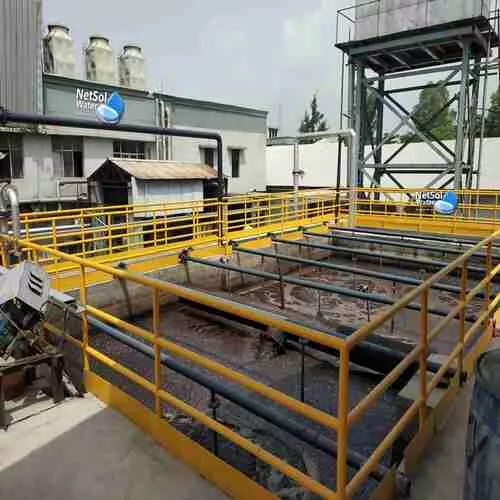
Sewage Treatment Plant
Netsol WaterSewage Treatment Plant or STP plant is employed to get rid of contaminants from waste water. It involves physical, chemical and organic process to get rid of physical, chemical and biological contaminants.
Sewage Treatment Plant is extremely effective and economical. Nestsol Water is that the manufacturer of STP plant in civil and mechanical both based in Noida, Delhi NCR, India.
Our clients give regeneration(best STP Manufacturer) for the compact design, user friendly, durability, low maintenance, corrosion resistance and longer service life features of all our STP plant structures and performance.
TYPES OF STP (SEWAGE TREATMENT PLANT)
STP – E.A. (Extended Aeration)
STP – SAFF (Submerged Aeration Fixed Film)
STP – SBR (Sequential Batch Reactor)
STP – MBBR (Moving Bed Bio Reactor)
STP – MBR (Membrane Bio Reactor)
SEWAGE TREATMENT PLANT (STP)
We offers an entire range of Sewage Treatment Plant solutions. Either using conventional world class technologies or more modern membrane processes.
We provide best result to customer for STP Planst / Projects Environment control plants. We using world class technology & Economically, Easy to work , Customized solutions.
Netsol may be a leading sewage treatment plant manufacturer within the field of water management solutions turnkey projects. Our water treatment plants are 100% capable to treat the economic process waste water, commercial waste water & domestic waste water and also give the results as per described the norms of CPCB / SPCB.
Sewage Treatment Plant Manufacturer / Supplier – NetsolWater
As India hurtles towards a more developed economy one among the casualties has been the deteriorating state of our surroundings. Rapid industrialization has unfortunately hiked up the amount of pollutants in our surroundings. One among these pollutants is wastewater or Sewage. Management of waste water through sewage treatment plants in India has become an important of our cities today.
Sewage treatment / Waste Water management may be a promising sector
Water pollution in India is posing a big threat to human health. Large volumes of unprocessed wastewater are being discharged by industries into freshwater sources, leading to frequent outbreak of water-borne diseases and environmental degradation. This discharge of unprocessed waste into freshwater bodies is leak unfit not just for human consumption but also for industrial and agricultural use.
India’s population (1.3 billion) is growing about 1.3 per cent annually and therefore the demand for clean water by 2030 may exceed supply by 50 per cent. To make sure that this impending water crisis is avoided effective water and WasteWater management highly crucial in India. Various authorities have initiated concentrated efforts towards wastewater management in India.
The Government of India has taken several steps towards this sector like fixing of the Viability Gap Funding scheme. Through this scheme, the govt offers support to those infrastructure projects that are economically justifiable, but not viable commercially within the immediate future. Policies of zero discharge or zero liquid discharge have also been drafted by the Pollution control panel and therefore the Ministry of Environment and Forests, so as to scale back water wastage. Indian government is supporting public-private participation within the sector as a measure to mitigate water woes through efficient treatment of water effluents.
Private sector investments the wastewater treatment industry in India is looking to grow rapidly within the coming years and there's a requirement for personal players to support public authorities in creating awareness and offering innovative solutions for wastewater management. Wastewater may be a promising sector in municipal water and wastewater projects are being encouraged under the central govern- merit’s national water policy.
Working Process Sewage Treatment Plant
Sewage treatment is that the process of removing contaminants from wastewater, primarily from household sewage. It includes physical, chemical, and biological processes to get rid of these contaminants and produce environmentally safe treated wastewater (or treated e?uent).
What is our Sewage Treatment Plant & It’s Technology?
A by-product of sewage treatment is typically a semi-solid waste or slurry, called sewage sludge that has got to undergo further treatment before being suitable for disposal or land application. Sewage treatment can also be mentioned as wastewater treatment, although the latter may be a broader term which may even be applied to purely industrial wastewater.
Surface runo? and effluents from small-scale industries or pre-treated industrial wastewaters are sometimes routed through municipal sewage treatment plants when the en- vironmental advantages of treatment outweigh the dis- advantages of reduced treatment efficiency. Dilution of sewage by storm water runo? or industrial wastewater with low biochemical oxygen demand (BOD) decreases the efficiency of secondary treatment; because secondary treatment ecosystems require a minimum concentration of biologically decomposable waste to sustain the ecosys- tem population.
Effluent is usually discharged at a BOD concentration adequate to that required minimum, but it's going to be diluted to lower concentrations. In either case, the entire mass of BOD discharged to receiving waters is adequate to the dis- charge concentration times the ?ow volume; so dilution before secondary treatment reduces the waste concentration available to feed the ecosystem, and bigger volumes of dilute ?ow can discharge a greater mass of BOD.
Industrial wastewater may contain pollutants which can't be removed by conventional sewage treatment; and variable ?ow of commercial waste related to production cycles may upset the population dynamics of secondary sewage treatment ecosystems.
Is India needs More Sewage Treatment Plants?
The two main sources of water contamination are sewerage and industrial waste. With both the population of India and its industrial landscape increasing at an outstanding speed wastewater volume is additionally at an alarming rise. Adding to the present is that the shrinking of freshwater sources like rivers wells and groundwater and that we have an alarming situation. Some fear that very soon water may become a premium commodity. Rising levels of wastewater has another consequence.
Not only is it unfit for consumption it can mix with other water sources and contaminate it also. As an example contaminated water trickling into rivers and polluting it. When this water runs downstream and joins other water sources like other rivers the contamination further spreads. Wastewater also seeps into the bottom contaminating underground water sources. The result's that nearly every water source is today heavily polluted — from rivers wells to coastal areas.
Technology we are Using-
Sequencing Batch Reactor (SBR)
Moving Bed Bio Reactor (MBBR) / Fluidized Aerobic Bioreactor (FAB)
Membrane Bio Reactor (MBR)
BIOFOR Technology (Biological Filtration and Oxygenated Reactor)
High Rate Activated Sludge BIOFOR-F Technology
Submerged Aeration Fixed Film (SAFF) Technology
Fixed Bed Biofilm Activated Sludge Process (FBAS)
Rim flow Sludge Suction Clarifiers/Bio Tower
Improved Circular Secondary Clarifier
Eco-Bio Blocks
Features and Specifications of STP by Netsol-
Compact with low foot print
Optimum waste utilization
Completely expels hurtful components from modern effluents
Containerized and non-containerized modes are obtainable
Economical to use
Energy proficient
Fully automatic
Basic innovation utilized is enacted slop process
High speed processing
Inexpensive operation and maintenance
SAFF, FAB, MBBR like present day innovations used
Works on the oxygen consuming treatment